Educational Goals
The goal of this chapter is to provide a thorough understanding of the multi-layered clinical protocol and the multidisciplinary tools required for the execution of the Picasso Technique.
Learning Objectives
Upon completion of this chapter, the aesthetic medicine specialist will be able to: • Describe the five main components of the protocol (metabolic preparation, anatomical facial architecture design, staged clinical execution, Hand Art, and structured patient participation); • Detail the four scientifically classified execution phases and the essential role of the multidisciplinary expert team; • Explain the concepts of Hand Art (manual intelligence) and biologically individualized treatment timing (3–5 months or 7–12 months).
Behavioral Objectives
By the end of this chapter, the specialist must be able to design a complete treatment protocol for a hypothetical patient, list the composition of the multidisciplinary team and the four execution phases, and prepare a personalized biological timeline that incorporates metabolic conditioning and the Hand Art phase.
Methods:
PT Technique (Picasso Technique) employs a multi-layered protocol incorporating: (1) metabolic preparation through personalized nutritional conditioning; (2) anatomical facial architecture design based on skeletal, vascular, muscular, dermal, and genetic profiling; (3) staged clinical execution integrating microsurgery, regenerative medicine (including stem cells and conditioned media), plasma-based techniques, and personalized material engineering; (4) manual clinical intelligence (Hand Art) refined through long-term anatomical and cross-genetic experiential practice; and (5) continuous multidisciplinary team calibration combined with structured patient participation.
Methodology and Clinical Protocol
The Picasso Technique follows a structured multi-stage process:
- Psychological and Aesthetic Assessment The patient’s emotional state, self-perception, and facial identity are evaluated. This stage ensures that the transformation aligns with the patient’s natural character and expression.
- Structural Facial Analysis Advanced observation of facial proportions, asymmetry, aging patterns, and dynamic expressions.
- Mapping Phase Sensitive facial points are identified and mapped based on anatomical and artistic evaluation.
- Integrated Intervention A combination of methods may be applied, including: • Precision injectors • Plasma-based regenerative elements • Microsurgical refinement • Laser support technologies • Stem-cell-based biological stimulation • Robotic-assisted accuracy in selected procedures
- Manual Artistic Finalization A defining element of the Picasso Technique is the manual artistic stage, where final adjustments are performed using refined hand techniques developed through years of practice and observation.
Core Impact, Multidisciplinary Instruments, and Clinical Execution of PT Technique (Picasso Technique)
1. Primary Impact and Foundational Requirement: The Multidisciplinary Expert Team
PT Technique (Picasso Technique) is not merely a procedural method; it is a comprehensive medical-design system for facial architecture. Its primary impact lies in achieving anatomically precise, biologically compatible, and psychologically harmonious facial restoration and enhancement.
This methodology cannot be executed by a single practitioner. Any attempt to perform PT Technique individually would require an impractical duration and would significantly compromise safety, precision, and outcome stability.
The most critical “instrument” in Picasso Technique is therefore a highly trained multidisciplinary expert team, structured and educated within a unified scientific and aesthetic doctrine.
The core team must obligatorily include: • Board-certified Plastic and Reconstructive Surgeon • Medical Dermatologist (MD, Dermatology) • Clinical Psychologist / Behavioral Scientist • Nanotechnology Specialist (Medical Nanomaterials & Delivery Systems) • Biostatistician / Medical Statistician (Outcome modeling & response prediction) • Medical Facial Designer (Anatomy-based aesthetic design specialist) • Stem Cell Physician (MD or PhD in Regenerative Medicine – Stem Cells & Conditioned Media) • Robotic Surgery / Medical Robotics Technician
The coordinated interaction of these specialists constitutes the primary instrument of Picasso Technique. No technological tool supersedes the calibrated intelligence of this trained human system.
2. Metabolic Preparation: Therapeutic Nutrition as a Clinical Instrument
A patient-specific nutritional protocol is mandatory within Picasso Technique. This is not cosmetic dieting, but metabolic engineering. The diet is designed to:
• Regulate enzymatic activity • Optimize mitochondrial performance • Modulate inflammatory pathways • Stabilize hormonal and metabolic responses • Prepare tissue microenvironments for regeneration and remodeling
This nutritional conditioning transforms the body into a biologically receptive platform for structural redesign. Without this metabolic preparation, any aesthetic intervention becomes biomechanically unstable and clinically unpredictable.
3. Anatomical Design: Medical Facial Architecture
Design within PT Technique is a medical process, not an artistic guess. The facial design is constructed through multi-layer anatomical analysis:
• Skeletal framework • Vascular mapping • Muscular anatomy and facial expression dynamics • Dermal and subdermal architecture • Congenital traits and developmental history • Genetic background and inherited structural tendencies • Functional mimetics (action–reaction patterns of facial movement) • Relevant systemic and local pathologies
This design process is medical-engineering-based and rooted in fundamental biological sciences. The objective is to generate a biologically coherent facial architecture, not merely visual symmetry.
4. Structured Clinical Execution in Four Phases
PT Technique (Picasso Technique) is executed in four scientifically classified phases:
- Microsurgical Structural Modulation
- Stem Cell and Regenerative Medicine Integration
- Plasma-based Techniques and Personalized Viscosity Fillers (custom-formulated based on the patient’s anatomical profile described in Section 3)
- Manual Artistic Calibration (Hand Art Phase)
Each material, plasma formulation, and filler viscosity is customized per patient and is never standardized across individuals.
5. The Concept of “Hand Art” (Manual Intelligence)
Conventional aesthetic medicine relies on repetitive technical templates. The same filler volumes, identical injection vectors, uniform surgical pressures, and standardized instruments are applied to heterogeneous anatomies. This is a fundamental error in global aesthetic practice.
Human facial anatomy is not standardized. Therefore: • The pressure of a surgical blade, • The angle and force of injection, • The depth and tactile modulation of contouring, • The manual feedback during tissue manipulation,
must be individually calibrated for each anatomical layer and each patient.
“Hand Art” refers to the trained neuro-sensory intelligence of the practitioner’s hands. Through refined tactile perception and biomechanical feedback, the practitioner identifies the optimal particulate distribution point in each tissue layer and sculpts micro-structures accordingly.
This capacity requires extensive anatomical immersion and long-term experiential training. Dr. Farzan Malekzadeh dedicated over ten years to advanced human anatomical studies, combined with ten years of professional sculptural practice, working on facial structures across more than 150 genetic backgrounds worldwide. This cross-genetic anatomical exposure demonstrates that despite superficial visual similarities, human facial biology and biomechanical responses differ profoundly.
Hand Art, refined by scientific knowledge and deep experiential feedback, becomes the decisive factor in creating outcomes that surpass standardized medical aesthetics.
6. Temporal Architecture: Individualized Treatment Timing
Time scheduling in Picasso Technique is biologically individualized. Following metabolic, genetic, and anatomical assessment, the full Picasso Technique protocol may yield results within: • 3–5 months in some patients • 7–12 months in others
This variation is not pathological. It reflects differences in: • Metabolic absorption • Cellular regeneration capacity • Tissue response kinetics • Genetic remodeling potential
Human biological systems display heterogeneous response profiles. As observed in immune response variability (e.g., COVID-19 outcomes), individuals exposed to identical stimuli may demonstrate entirely different physiological reactions.
PT Technique (Picasso Technique) does not introduce foreign identity into the body; rather, it reorganizes existing biological structures through precise regenerative and architectural modulation. Biological individuality, therefore, governs temporal outcome dynamics.
7. Conceptual Principle
PT Technique (Picasso Technique) does not “add a face to the body.” It reveals the most coherent biological version of the existing face by aligning anatomy, regeneration, psychology, and design into a unified medical architecture.
Clinical Outcomes and Observed Effects
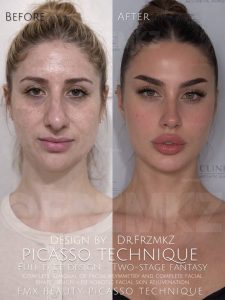
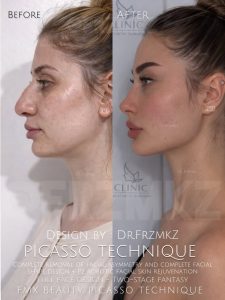
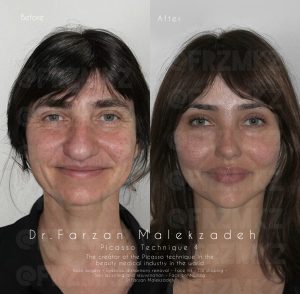
Reported outcomes of the technique include: • Improved facial symmetry • Natural-looking rejuvenation • Increased skin vitality and clarity • Enhanced structural balance of the face • Youthful appearance without loss of identity
In many cases, only a small proportion of the facial structure requires modification to achieve a visible transformation. This aligns with the fundamental philosophy of the method: minimal intervention, maximum structural impact.
Deep in Picasso Technique History
For more than a century, the field of aesthetic medicine and facial reconstruction has evolved through a series of scientific breakthroughs. From the early foundations of modern plastic surgery to the development of advanced anatomical mapping of the human face, physicians and researchers have continuously searched for methods that could restore harmony, symmetry, and youthfulness while respecting the biological complexity of human tissue.
Throughout the twentieth century, pioneers in facial surgery introduced transformative procedures such as Rhinoplasty, which demonstrated that the structure of the face could be reshaped with surgical precision. Later advancements in facial lifting techniques further expanded the understanding of muscular layers, vascular pathways, connective tissues, and the biomechanical behavior of skin elasticity. These innovations significantly influenced both reconstructive and cosmetic medicine.
By the late twentieth century, the introduction of injectable technologies and dermal fillers marked another major turning point. Minimally invasive procedures allowed practitioners to modify lips, chin, jawline, and localized facial regions with greater safety and reduced recovery time. However, despite these advances, most aesthetic interventions remained fragmented—treating individual areas of the face rather than addressing the face as an integrated anatomical and aesthetic system.
The fundamental challenge remained unresolved: How can the human face be redesigned in a holistic manner while preserving biological integrity, symmetry, and natural expression?
In 2004, Farzan Malekzadeh introduced a conceptual shift that would later evolve into what is now known as the Picasso Technique. Through extensive experimentation with needle-based instruments, advanced injectors, and varying viscosities of biological and synthetic materials, Malekzadeh observed that small variations in injection dynamics could produce significantly different structural responses in facial tissues.
His research led to a critical discovery: modifying less than 10–15% of strategically selected facial points could influence the visual architecture of the entire face. This insight led to the early concept of full-face structural design, initially referred to as a comprehensive facial design system rather than traditional contouring.
The early framework, known as Picasso Technique, emerged from the integration of plasma-based biological materials, injector technologies, and an artistic understanding of facial proportions. Malekzadeh’s multidisciplinary background—combining visual arts, photography, sculptural analysis of human form, and extensive observation of facial expressions across thousands of subjects—allowed him to identify what he described as sensitive structural points of the face. These points, when approached with precision, could influence symmetry, rejuvenation, and overall facial harmony.
Between 2007 and the following years, the methodology evolved rapidly with the integration of plasma systems, regenerative approaches, laser technologies, and early nanotechnological concepts in aesthetic medicine. These developments gradually transformed the original Picasso Technique framework into a more advanced system capable of enhancing facial balance, improving skin quality, and producing a visibly younger appearance while maintaining natural expression.
A major milestone occurred in 2014, when the technique incorporated five central domains of modern aesthetic science: plastic surgery principles, microsurgical precision, plasma-based regenerative methods, advanced injector systems, and robotic-assisted technologies. The convergence of these disciplines marked the foundation of what would become known globally as the Picasso Technique.
According to early clinical demonstrations, the name “Picasso Technique” emerged when observers described the method as a form of artistic facial reconstruction—where science and artistic design converge to reshape the human face with precision and vision.
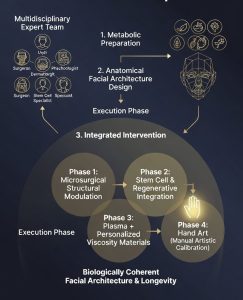
Figure 4.1. Flowchart of the multi-layered clinical protocol and four execution phases of the Picasso Technique, including the role of the multidisciplinary expert team and Hand Art phase.
Clinical Pearls & Pitfalls
- Pearl: The multidisciplinary expert team is the single most important “instrument” of the Picasso Technique. Performing this method without the full team significantly compromises safety, precision, and long-term stability.
- Pearl: Hand Art (refined manual intelligence) cannot be replaced by any device or robotic system. It is the decisive factor that separates good results from exceptional biological outcomes.
- Pitfall: Standardizing filler volumes, viscosities, or injection sequences across patients is the fastest way to fail in this technique. Every material and every phase must be custom-formulated.
- Pearl: Metabolic preparation is not optional — it is a clinical prerequisite. Skipping or shortening this phase makes subsequent interventions biomechanically unstable.
- Pearl: Treatment duration varies biologically (3–5 months vs 7–12 months). Never promise a fixed timeline; instead, educate the patient about biological individuality.