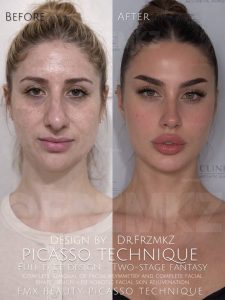
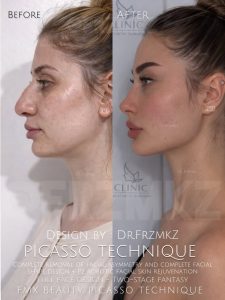
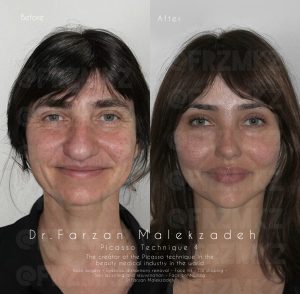
Picasso Technique Gallery
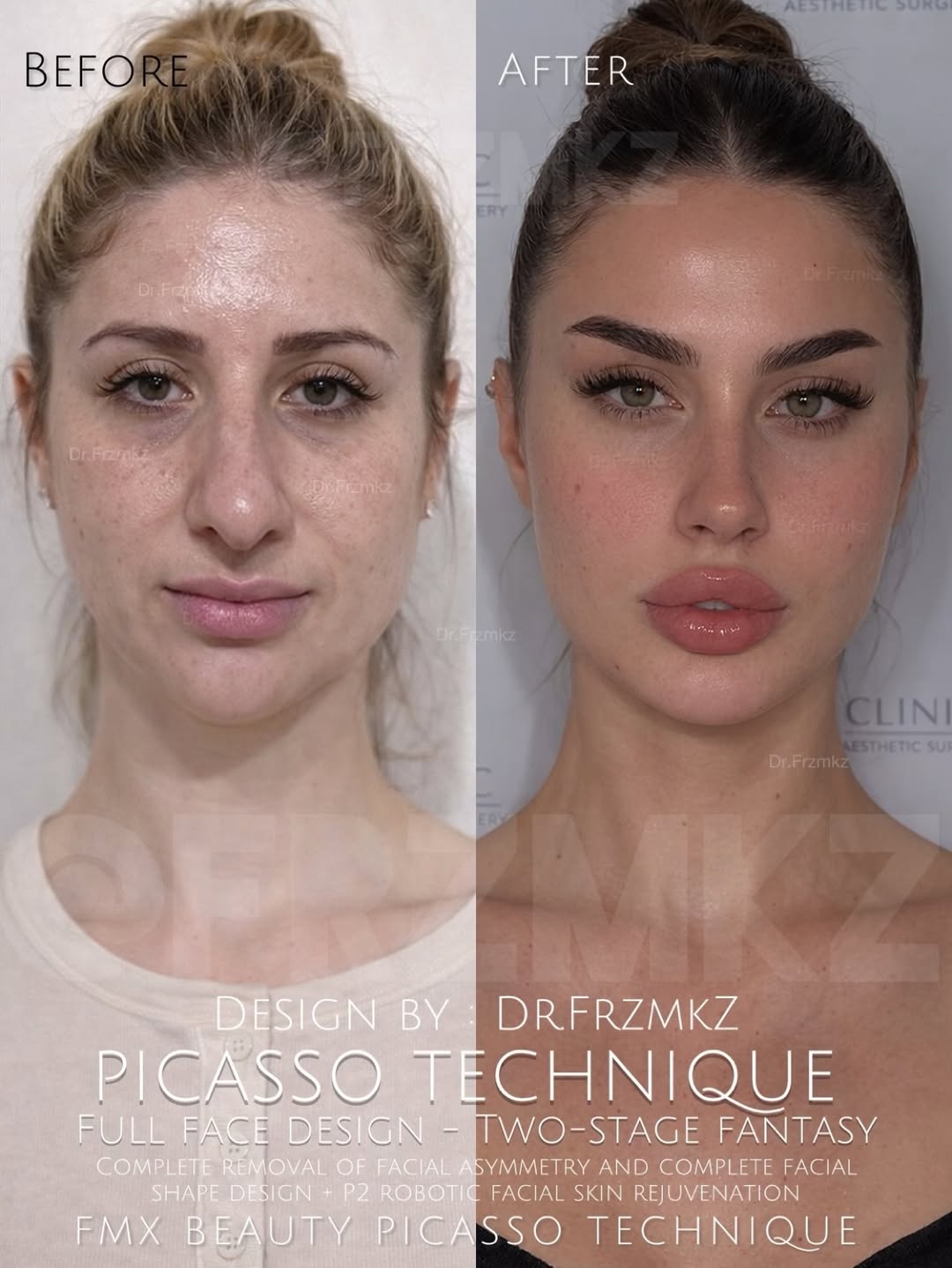
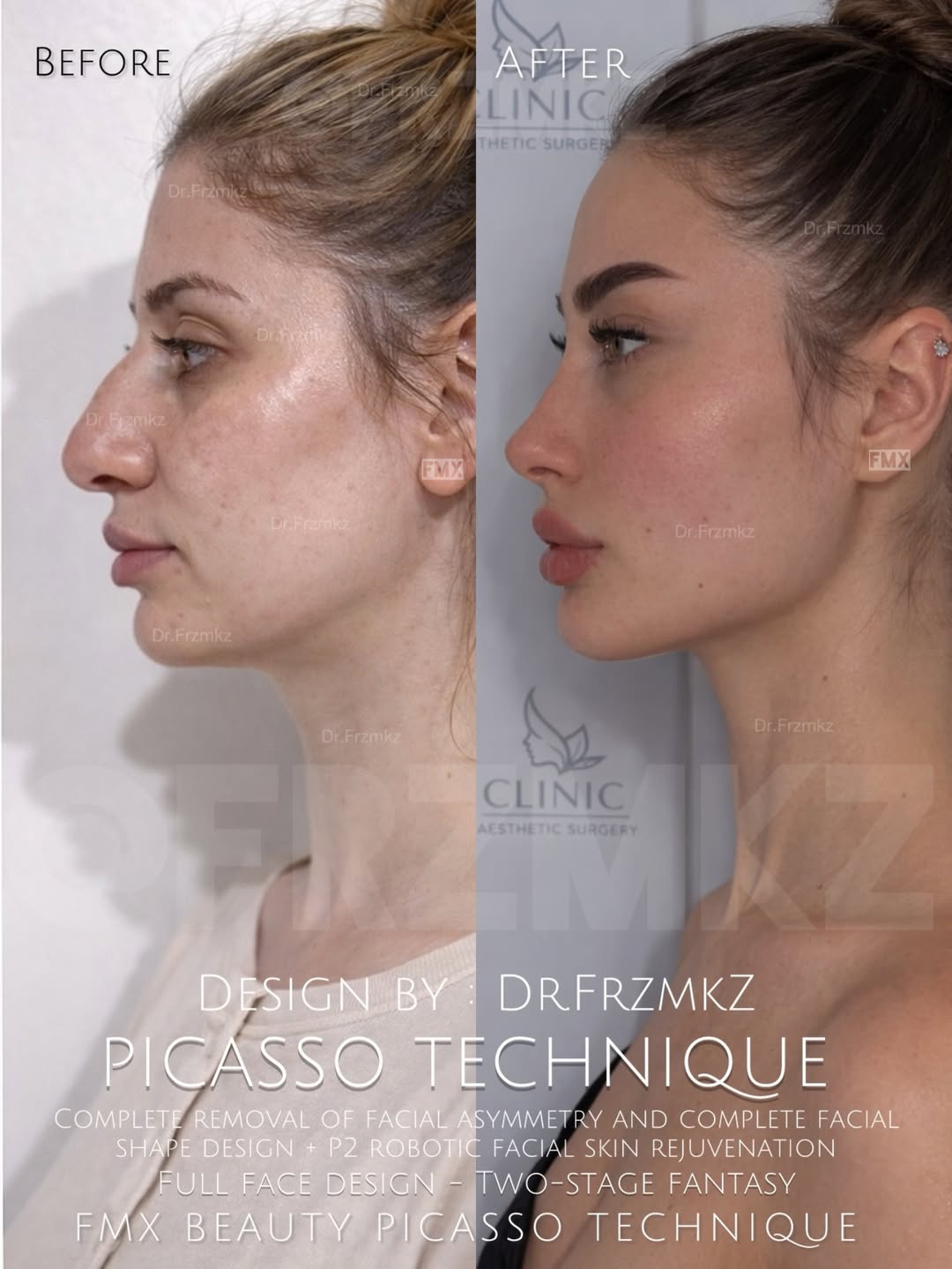
Picasso Technique in Facial Reconstruction
Long-Term Full-Face Reconstruction Using the Picasso Technique
Correction of Asymmetry, Filler Complications, and Structural Instability
. Abstract
Background:
The increasing prevalence of filler-related complications, fibrosis, and structurally inconsistent aesthetic outcomes has exposed the limitations of conventional, product-based aesthetic approaches.
Objective:
To present a clinical case demonstrating the use of the Picasso Technique (PT Technique) as a structured biomedical system for long-term facial reconstruction, targeting asymmetry, tissue damage, and biomechanical instability.
Methods:
A patient with facial asymmetry, incorrect filler placement, fibrosis, ligament weakness, and poor prior aesthetic outcomes underwent a staged, full-face reconstruction protocol. The intervention included asymmetry correction, filler complication management, fibrosis repair, volume redistribution, and ligament support restoration, guided by Structural Influence Points (SIP), regenerative activation, and individualized anatomical mapping.
Results:
The gradual intervention resulted in improved facial symmetry, restoration of structural balance, reduction of fibrotic irregularities, and recovery of natural facial identity. Outcomes were achieved without overcorrection, emphasizing biological coherence and long-term stability.
Conclusion:
The Picasso Technique (PT Technique) provides a comprehensive solution for complex aesthetic and structural complications, shifting the paradigm from temporary cosmetic correction to long-term biomedical facial reconstruction.
Keywords :
Picasso Technique; PT Technique; Facial Reconstruction; Filler Complications; Fibrosis; Structural Asymmetry; Regenerative Aesthetics; Facial Architecture; Biomedical Design
. Introduction
Modern aesthetic medicine has experienced a rapid expansion in the use of injectable materials and minimally invasive procedures. However, this growth has been accompanied by an increasing incidence of complications, including volume misplacement, fibrosis, ligament instability, and unnatural facial outcomes.
Conventional approaches often address these complications in a fragmented manner, focusing on isolated corrections without restoring overall facial harmony. The Picasso Technique (PT Technique) introduces a systemic alternative by conceptualizing the face as a dynamic structural ecosystem, where targeted intervention at key anatomical points can restore global balance (Picasso Technique, Chapter 2).
This method integrates regenerative medicine, structural design, and individualized treatment planning into a unified biomedical framework (Chapter 1).
. Case Presentation
A patient presented with the following clinical features:
- Facial asymmetry
- Complications from previous filler injections
- Fibrotic tissue formation
- Volume misplacement
- Ligament weakness
- Unsatisfactory prior aesthetic results
The primary objective was to achieve structural correction and biological restoration while preserving natural identity.
. Methods
The treatment was conducted according to the Picasso Technique protocol (Chapter 4), emphasizing individualized design and staged execution.
3.1 Anatomical Mapping
Detailed mapping of sensitive facial points (SIP) was performed to identify high-impact structural nodes influencing global facial balance (Chapter 3).
3.2 Intervention Strategy
The following components were integrated:
- Facial asymmetry correction
- Management of incorrect filler complications
- Fibrosis and tissue damage repair
- Volume redistribution and structural rebalancing
- Ligament support restoration
3.3 Scientific Framework
The intervention was guided by:
- Structural Influence Points (SIP)
- Viscosity-Based Tissue Response
- Regenerative Activation
(Chapter 2)
3.4 Temporal Protocol
The reconstruction was performed gradually over a biologically determined timeline, allowing tissue adaptation and regenerative remodeling (Chapter 4, Chapter 6).
. Results
The treatment resulted in:
- Improved facial symmetry
- Reduction of fibrotic irregularities
- Restoration of balanced volume distribution
- Enhanced ligament support and structural stability
- Natural and harmonious facial appearance
Importantly, the transformation was achieved through progressive correction, avoiding abrupt or artificial changes.
. Discussion
This case highlights several key aspects of the Picasso Technique:
5.1 Reconstruction of Iatrogenic Complications
Unlike conventional methods, which often attempt to camouflage complications, the PT Technique addresses their structural and biological origins (Chapter 5).
5.2 System-Based vs Product-Based Approach
The correction was not dependent on a specific product but on a system-level understanding of facial architecture (Chapter 2).
5.3 Role of SIP in Global Correction
Targeting key structural points enabled full-face improvement through minimal intervention, demonstrating the efficiency of SIP-based design (Chapter 3).
5.4 Regenerative Component
The inclusion of regenerative activation facilitated:
- Tissue repair
- Reduction of fibrosis
- Improved biological function
(Chapter 2)
5.5 Gradual Transformation and Biological Timing
The staged approach allowed:
- Safe tissue remodeling
- Predictable outcomes
- Long-term stability
(Chapter 4, Chapter 6)
. Ethical Considerations
The intervention adhered to:
- Minimal Effective Design (MED)
- Avoidance of overcorrection
- Restoration of natural proportions
- Patient-specific customization
(Chapter 5)
All procedures were performed within a medically justified framework and presented for educational purposes only.
. Conclusion
This case demonstrates that the Picasso Technique (PT Technique) is an effective system for managing complex aesthetic complications and structural abnormalities.
By integrating:
- Anatomical mapping
- Regenerative activation
- Multilayer intervention
- Gradual biological adaptation
the technique enables true facial reconstruction, not merely cosmetic correction.
The findings support the classification of Picasso Technique as a biomedical facial architecture system capable of restoring both structure and identity.
. References
- Picasso Technique Textbook – Chapter 1: Overview of Technique
- Picasso Technique Textbook – Chapter 2: Scientific Foundations
- Picasso Technique Textbook – Chapter 3: Anatomical Mapping
- Picasso Technique Textbook – Chapter 4: Clinical Methodology
- Picasso Technique Textbook – Chapter 5: Safety, Ethics & Indications
- Picasso Technique Textbook – Chapter 6: Longevity & Patient Participation
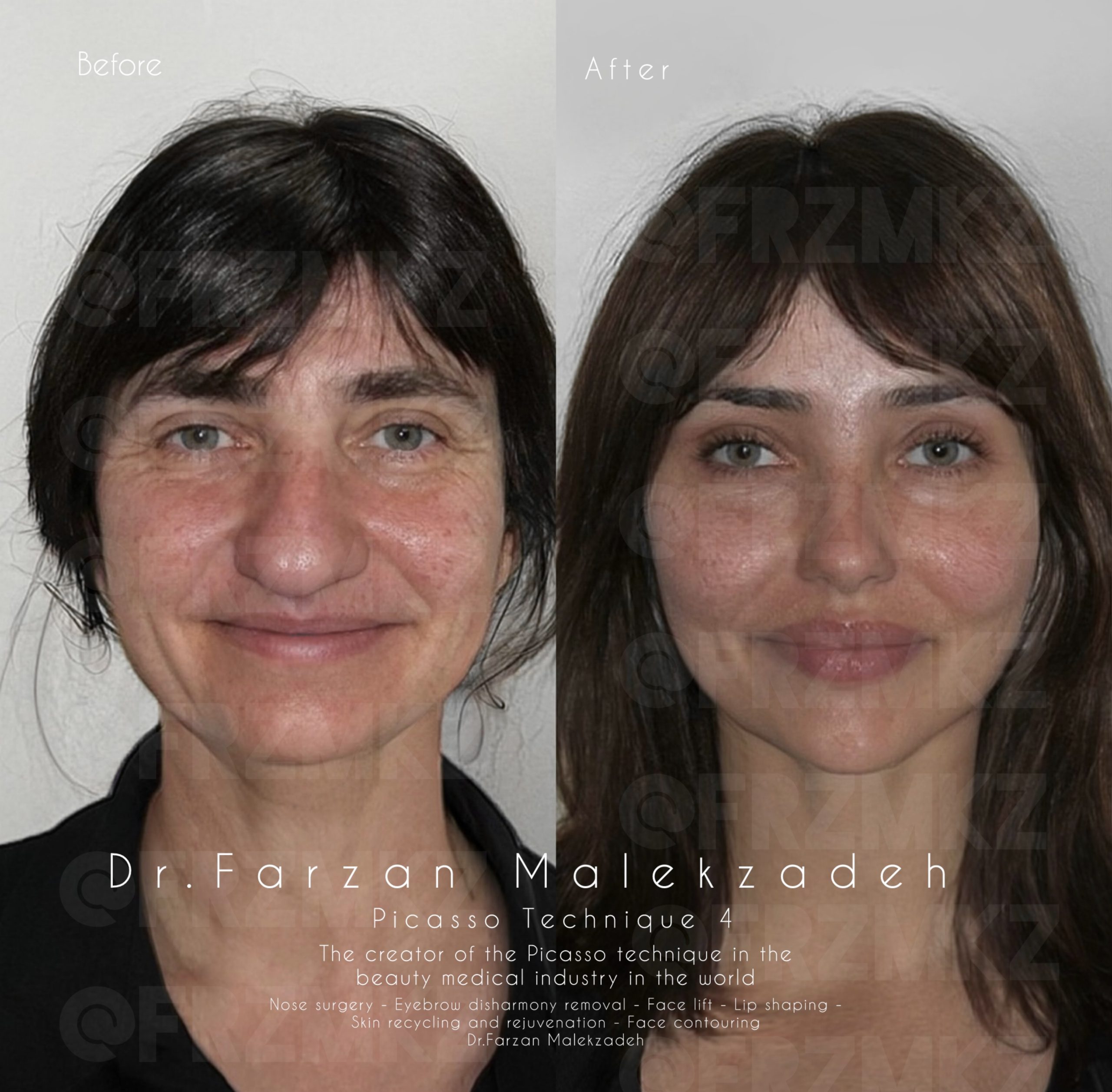
Multilayer Facial Architecture Using Picasso Technique
Full-Face Structural Redesign with Multilayer Picasso Technique (PT)
From Eyebrow Disharmony to Regenerative Facial Harmony
(86-Day Transformation)
. Abstract
Background:
Contemporary aesthetic interventions are predominantly based on localized, static, and product-driven methodologies that often fail to address the face as an integrated biological system.
Objective:
To present a clinical case demonstrating the application of the Picasso Technique (PT Technique) as a dynamic, point-based, and regenerative full-face design system, emphasizing structural harmony, biological coherence, and patient-specific outcomes.
Methods:
A comprehensive full-face intervention was performed using a multilayer protocol including micro-surgery, eyebrow disharmony correction, structural face lifting, architectural lip shaping, skin regenerative recycling, global contouring, and P2 device-assisted modulation. The treatment followed the standardized Picasso Technique framework, including anatomical mapping, Structural Influence Point (SIP) targeting, regenerative activation, and staged execution.
Results:
Within 86 days, the patient demonstrated improved facial symmetry, enhanced structural balance, optimized skin quality, and preservation of natural identity. The intervention achieved global facial transformation through minimal yet strategically targeted modifications.
Conclusion:
The Picasso Technique represents a paradigm shift from localized aesthetic correction toward systemic biomedical facial architecture. This case supports the effectiveness of point-based full-face design combined with regenerative activation in achieving sustainable and biologically coherent outcomes.
Keywords :
Picasso Technique; PT Technique; Facial Architecture; Regenerative Aesthetics; Structural Influence Points (SIP); Full-Face Design; Aesthetic Medicine; Biological Coherence; Multilayer Intervention
. Introduction
Aesthetic medicine has traditionally operated through localized interventions targeting isolated facial regions such as the lips, jawline, or periorbital area. While these approaches may produce short-term visual improvements, they frequently neglect the interconnected nature of facial anatomy, metabolic dynamics, and psychological expression.
The Picasso Technique (PT Technique) introduces a fundamentally different paradigm by conceptualizing the face as a dynamic structural ecosystem, where minimal interventions at strategically selected points can induce global architectural transformation (Picasso Technique, Chapter 2).
This method integrates regenerative medicine, anatomical engineering, and psychological alignment into a unified biomedical framework, redefining aesthetic intervention as a form of regenerative life-design (Chapter 1).
. Case Presentation
A patient presented with:
- Eyebrow asymmetry and disharmony
- Early signs of structural facial aging
- Imbalance in contour and soft tissue distribution
- Reduced skin vitality
The treatment objective was to achieve global facial harmony and rejuvenation while preserving the patient’s natural identity.
. Methods
The intervention was performed according to the standardized Picasso Technique protocol (Chapter 4), including:
3.1 Anatomical Mapping
Sensitive facial points (SIP) were identified through dynamic and structural analysis (Chapter 3).
3.2 Multilayer Intervention Components
The following procedures were executed:
- Micro-surgery full face
- Eyebrow disharmony removal
- Structural face lift
- Lip shaping (architectural approach)
- Skin recycling and regenerative rejuvenation
- Full-face contouring
- P2 device-assisted structural modulation
3.3 Scientific Framework
The treatment was guided by three core principles:
- Structural Influence Points (SIP)
- Viscosity-Based Tissue Response
- Regenerative Activation
(Chapter 2)
3.4 Treatment Timeline
The complete transformation occurred over 86 days, consistent with biologically individualized treatment timing (Chapter 4).
. Results
Post-treatment evaluation demonstrated:
- Improved eyebrow symmetry and upper-face balance
- Enhanced global facial harmony
- Natural lifting effect without overcorrection
- Increased skin quality, clarity, and vitality
- Harmonized lip structure within overall facial proportions
- Preservation of natural facial identity
The results confirmed that modification of a limited number of high-impact structural points can produce a significant full-face transformation (Chapter 3).
. Discussion
This case highlights several critical distinctions between the Picasso Technique and conventional aesthetic methodologies:
5.1 Full-Face System vs Local Correction
Traditional methods treat isolated zones, whereas this case demonstrates a system-level transformation through SIP-based intervention (Chapter 2).
5.2 Regenerative vs Additive Approach
Instead of volumetric augmentation, the technique utilized regenerative activation, improving tissue quality and biological function (Chapter 2).
5.3 Multilayer Integration
The combination of surgical, regenerative, and device-assisted interventions reflects the four-phase execution model of PT Technique (Chapter 4).
5.4 Role of Clinical Intelligence (Hand Art)
Final outcomes are influenced by manual precision and tactile feedback, known as Hand Art, which cannot be standardized (Chapter 4).
5.5 Temporal Biological Adaptation
The 86-day timeline reflects patient-specific regenerative kinetics, reinforcing that outcomes are biologically, not procedurally, determined (Chapter 4).
. Ethical Considerations
The intervention adhered to the principles of:
- Minimal Effective Design (MED)
- Biological coherence
- Patient-specific customization
(Chapter 5)
The case was presented solely for educational and scientific purposes.
. Conclusion
This case demonstrates that the Picasso Technique (PT Technique) enables:
- High-impact transformation through minimal intervention
- Integration of regeneration and structural design
- Preservation of identity with enhancement of harmony
The findings support the classification of Picasso Technique as a biomedical facial architecture and regenerative life-design system, rather than a conventional aesthetic procedure (Chapter 1, Chapter 6).
. References
- Picasso Technique Textbook – Chapter 1: Overview of Technique
- Picasso Technique Textbook – Chapter 2: Scientific Foundations
- Picasso Technique Textbook – Chapter 3: Anatomical Mapping
- Picasso Technique Textbook – Chapter 4: Clinical Methodology
- Picasso Technique Textbook – Chapter 5: Safety, Ethics & Indications
- Picasso Technique Textbook – Chapter 6: Longevity & Patient Participation
It is possible to achieve anatomical modification of the face without surgery using the Picasso Technique (PT Technique), with reported improvements of up to 73% in selected cases. This non-surgical approach enables structural reshaping, including nasal contour modification in previously untreated noses, as well as restoration of facial skin quality through a regenerative and biomechanical framework.
The technique is based on a staged intervention protocol, allowing progressive structural adaptation and biological remodeling, rather than immediate surgical alteration.
No Surgery
Advanced Facial Reconstruction Using the Picasso Technique
This case represents a three-phase facial design protocol, focused on correcting facial asymmetry and reversing structural aging changes, including deep lines and tissue degeneration.
The treatment was executed through a three-stage robotic-assisted system, incorporating:
• Advanced contouring
• Regenerative lifting using stem cell-based protocols
• Comprehensive facial conditioning
All performed over a 76-day structured timeline.
The Picasso Technique, originally developed in 2014 and significantly advanced in 2019, represents a next-generation medical-aesthetic system. This updated version introduces substantial improvements in both precision of execution and long-term structural outcomes.
The contouring in this case was performed using the PPP system, a proprietary methodology that evolved from earlier contouring frameworks introduced in 2007 by this company. Compared to earlier techniques, PPP provides:
• Greater structural control
• Enhanced volumetric distribution
• More natural and stable lifting results
As a result, the patient achieved:
• Full facial lift
• Noticeable rejuvenation
• Complete correction of asymmetry
It is important to note that the patient presents with a thick skin phenotype, which is known to be more resistant to conventional surgical approaches and often yields less predictable outcomes with traditional methods. This makes the achieved results significantly more complex and clinically valuable.
Additionally, nasal correction was performed using a specialized non-invasive surgical system, with no incisions, maintaining full structural harmony with the overall facial design.
The final outcome reflects a balanced facial harmony, tailored proportionally to the patient’s anatomy.
At the time of treatment (2019), this protocol was delivered with a 10-year durability guarantee. The current visual documentation, recorded approximately 7.5 to 8 years post-procedure, demonstrates that the results remain stable, with only minimal residual skin trauma visible.
This particular case is among the rare procedures performed entirely by Farzaneh Malekzadeh personally.
Today, the majority of procedures within the company are executed by a large, specialized team, while Farzaneh Malekzadeh primarily serves as the founder and lead conceptual designer of these advanced techniques.